Bathroom Water Damage in Hidden Lake: Toilet & Shower Leaks
Bathroom leaks rarely announce themselves. In Hidden Lake homes, the first sign is usually a soft spot near the toilet base, a stained ceiling below the second floor bath, or a faint musty smell that gets stronger every shower. By the time you notice, water has often been migrating through the subfloor, wall cavities, and floor joists for days or weeks. That hidden travel time is what turns a small plumbing issue into a four figure or five figure restoration job.
At Hidden Lake Water Restoration, we have responded to bathroom water losses across Hidden Lake since 2018, and the pattern is consistent: shower pan leaks and toilet supply failures look similar on the surface but behave very differently underneath. One is usually a slow, clean water Category 1 problem that becomes Category 2 over time. The other can escalate to Category 3 within hours if the toilet flange or wax ring fails on the sewer side. The cleanup protocols, drying timelines, and insurance documentation are not interchangeable, and treating them the same way is how homeowners end up paying twice.
This guide gives you a single deep comparison between the two most common bathroom water damage scenarios we see, with the numbers, IICRC categories, and decision points you need when the water is still on your floor.
Quick Answer: What to Do First
Bathroom water damage in Hidden Lake usually starts with a wax ring failure, a cracked supply line, a shower pan leak, or grout breakdown around tile. Stop the source, dry the area within 24 to 48 hours, and document everything for insurance. If water reached the subfloor, ceiling below, or adjacent walls, you need professional extraction and structural drying, not a shop vac.
Immediate Steps in the First Hour
- Turn off the angle stop valve behind the toilet or shower
- Photograph the damage from multiple angles before moving anything
- Remove rugs, towels, and storage from the wet zone
- Open the bathroom door and run a fan if the area is small
- Check the ceiling below for staining or sagging
- Call your insurance carrier and a licensed restoration company
What Not to Do
- Do not lift wet tile or peel back vinyl flooring before documentation photos
- Do not run a household dehumidifier and assume the cavity is drying (surface air does not reach the subfloor)
- Do not bleach visible mold before a professional assessment, since it can mask the real contamination boundary
- Do not throw away damaged materials until your adjuster has reviewed them or approved disposal
The Five Most Common Bathroom Leak Sources
After thousands of bathroom calls across Hidden Lake and the surrounding metro, these are the leaks we find most often. Each one fails in a predictable way.
1. Wax Ring Failure Under the Toilet
The wax seal between the toilet base and the closet flange compresses over 15 to 20 years. When it fails, dirty water seeps onto the subfloor every flush. You will notice a soft floor near the toilet, a faint sewage smell, or stained ceiling tiles in the room below. This is Category 2 or 3 water under IICRC standards, which means porous materials usually cannot be saved. A rocking toilet is the single best early warning sign. If the bowl moves when you sit down, the flange seal is already breaking.
2. Cracked Toilet Supply Line
Braided steel supply lines have a service life of about 8 to 10 years. When the inner liner splits, you get a continuous stream at roughly 2 to 5 gallons per minute. A line that bursts while you are at work can flood an entire floor before you get home. We recommend swapping every supply line in the house on the same weekend once any one of them shows rust at the crimp. They cost under ten dollars each and fail without warning.
3. Shower Pan or Liner Leak
Tile showers built before 2010 often used mortar pan liners that crack over time. Water bypasses the liner and rots the subfloor under the shower. You rarely see this leak directly. You see it as a ceiling stain below or warped baseboards on the wall outside the shower.
4. Grout and Caulk Breakdown
Failed grout lets shower water reach the cement board behind the tile. Mold colonization can start in as little as 48 to 72 hours behind the wall. Our hidden leak detection guide walks through how we use thermal imaging and moisture meters to find these without tearing out tile blindly.
5. Drain and P-Trap Leaks
Loose slip nuts under the sink or a corroded shower drain assembly drip slowly into the cavity below. Slow leaks are the worst kind because mold has weeks to establish before anyone notices.
IICRC Water Categories and What They Mean for Your Bathroom
| Category | Source | Typical Bathroom Example | Material Salvage |
|---|---|---|---|
| Category 1 | Clean water | Supply line burst, sink overflow | Most materials savable if dried in 24 to 48 hours |
| Category 2 | Grey water | Shower drain backup, washing machine adjacent | Carpet pad, drywall below waterline usually removed |
| Category 3 | Black water | Toilet overflow with solids, sewage backup | Porous materials must be removed and disposed |
If your bathroom leak involved toilet contents past the trap, treat it as Category 3 until proven otherwise. Category 1 water also degrades over time. Clean water sitting in drywall and insulation for more than 48 hours reclassifies to Category 2, which changes what your insurance will cover and what we can save. Our toilet overflow cleanup breakdown explains the disinfection protocol we follow on these jobs.
When to Call Hidden Lake Water Restoration in Hidden Lake
If you have spotted any of the warning signs above, the cost of waiting is almost always higher than the cost of an inspection. Bathroom water damage compounds quickly because the framing stays warm and wet, which is the exact condition mold needs. Hidden Lake Water Restoration runs 24 7 emergency response across Hidden Lake, we are IICRC certified, and if your situation does not actually need full restoration, we will tell you that on the first call. Reach out anytime and we will get a technician to your door fast.
Realistic Repair Costs in Hidden Lake
| Damage Scope | Typical Cost Range | Timeline |
|---|---|---|
| Wax ring replacement and small subfloor patch | $400 to $900 | 1 day |
| Bathroom floor extraction and drying only | $1,200 to $2,800 | 3 to 5 days |
| Subfloor replacement plus drywall repair | $3,500 to $7,500 | 1 to 2 weeks |
| Full bathroom rebuild after Category 3 loss | $8,000 to $20,000+ | 3 to 6 weeks |
What Drives the Final Number
- Whether the ceiling below also needs demolition and repaint
- Tile age and availability of matching replacements
- Cabinet vanity condition after extended moisture exposure
- Whether the home has one bathroom or multiple (loss of use coverage may apply)
- Local permit requirements for plumbing and electrical work disturbed during repairs
When to Call a Professional
- Water has reached the ceiling below the bathroom
- The floor flexes or feels spongy when you step
- You see staining on walls outside the bathroom
- Any sewage involvement, even minor
- Visible mold or a persistent musty smell
- The leak source is hidden behind tile or inside a wall
For documentation help and pricing transparency, our full restoration cost breakdown covers what insurance typically pays and where homeowners get stuck with out of pocket charges.
What Hidden Lake Water Restoration Brings to a Bathroom Loss
- IICRC certified technicians on every job
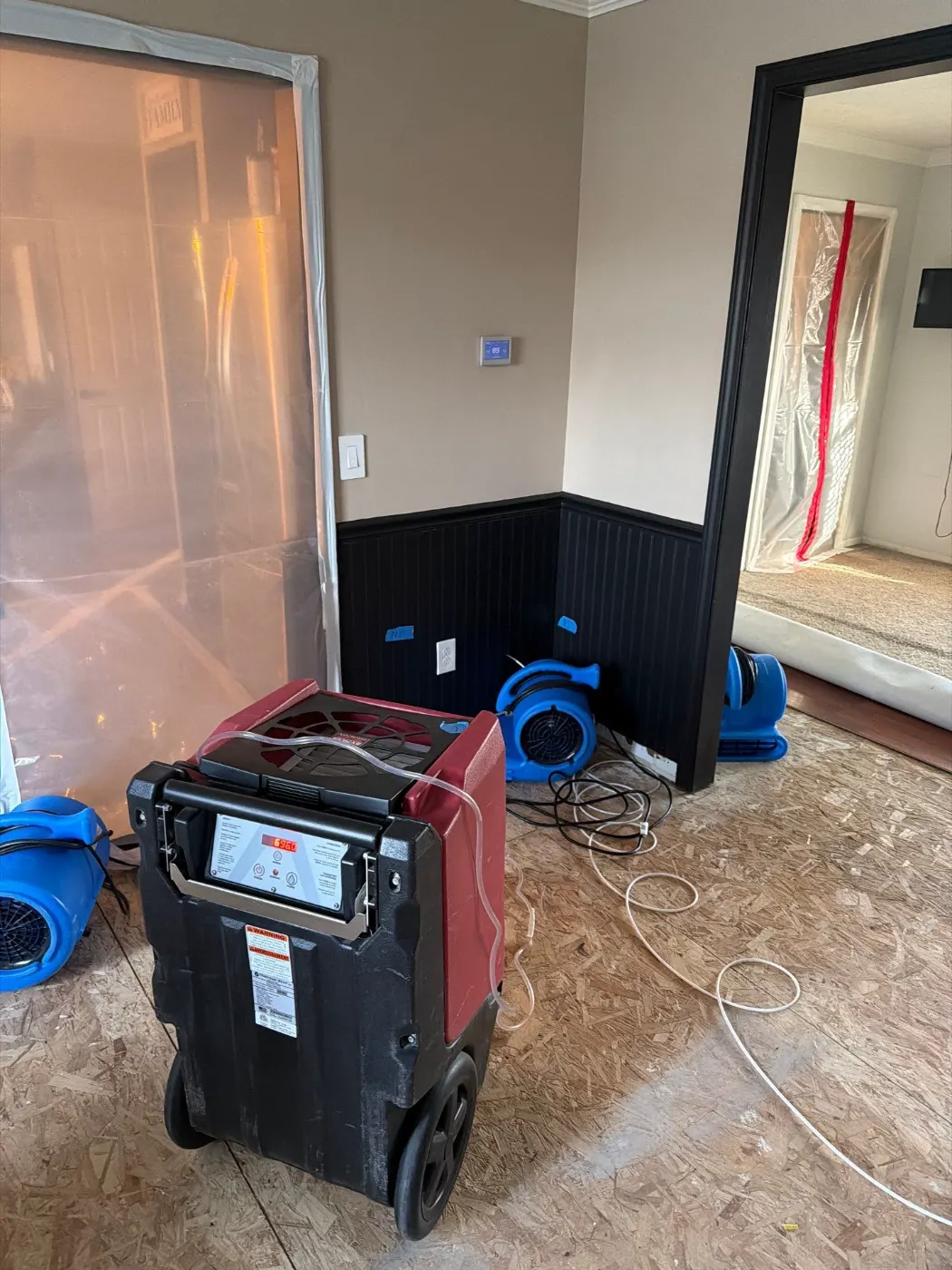
- truck mounted extraction and commercial dehumidification
- Direct insurance billing and adjuster coordination
- Moisture mapping with documented daily readings
- 24 7 emergency response across Hidden Lake and central Indiana
Frequently Asked Questions
How fast does bathroom water damage become serious in Hidden Lake?
Subfloor saturation begins within 2 to 6 hours. Mold colonies can establish in 24 to 48 hours under bathroom humidity conditions. Hidden Lake Water Restoration recommends extraction within the first 12 hours for any loss larger than 10 square feet.
Will homeowners insurance cover a toilet or shower leak?
Sudden and accidental discharge (burst supply line, cracked tank, failed valve) is typically covered by standard Hidden Lake policies. Gradual seepage, deferred maintenance, or slow grout failure is usually excluded. Hidden Lake Water Restoration provides documentation that supports your claim.
How much does bathroom water damage restoration cost?
Most contained bathroom losses in Hidden Lake run $1,200 to $3,500 for extraction, drying, and antimicrobial treatment. Losses affecting ceilings below or adjacent rooms range $3,500 to $8,000. Category 3 (toilet overflow) work starts around $2,800 due to PPE and disposal requirements.
Can the tile floor be saved after a shower pan leak?
Often yes. Glazed tile is non-porous, but the cement board or plywood beneath may need replacement if moisture readings exceed 20% for over 48 hours. Hidden Lake Water Restoration uses pinless meters and thermal imaging to map saturation before recommending removal.
Do I need to leave my home during drying?
For isolated bathroom losses in Hidden Lake, most homeowners stay in place. Equipment runs 24/7 and generates noise around 60 to 70 decibels. If Category 3 water or significant mold is present, Hidden Lake Water Restoration may recommend temporary relocation for 2 to 4 days.
Have a restoration question?
Our IICRC certified Hidden Lake crew is ready to help. Free assessments, estimate based on what we can sees, no pressure.